Image

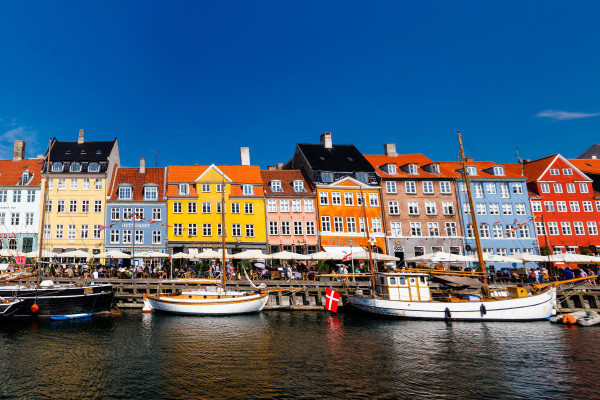
For B.S. in Data Science (BSDS) Admissions Ambassador Madeleine Cummings, studying abroad in Copenhagen for Fall 2025 semester has been more than a change of scenery — it’s been a chance to rethink what learning, balance, and exploration can look like. Through the DIS study abroad program, Cummings has been able to dive into courses on AI and human-computer interaction, contribute to hands-on gender-focused investment research, and experience a city designed around curiosity, community, and livability.
In this blog post, Cummings takes us through a typical week in Copenhagen, from field study Wednesdays to long class days in the city center, weekend adventures across Europe, and the quieter moments that helped her appreciate the rhythms of everyday life abroad. Her reflections offer a thoughtful look at how to make the most of the study abroad experience: embracing academic challenge, seeking out local culture, and leaving room for discovery along the way.
Starting out on Monday, I don't actually have any classes. As my program is intended to give students enough blocks of time to explore the local area, classes are generally scheduled only once or twice a week for larger blocks of time. I lucked out with my schedule and only have class on Tuesdays and Thursdays.
One reason my schedule is more flexible is that I’m conducting a research project examining how investment behaviors and outcomes differ by gender. While my research group meets once a week, a large part of the project is independent work. So, I try to dedicate a good chunk of Monday to specifically working on the project. I also use Mondays to get organized for the rest of the week, including doing any readings or other assignments due in the upcoming days.
In order to be more productive and see more of the city, I like to try out different study spots. Some of my favorites I have found are the Black Diamond Library, Pauladin Cafe, Next Door Cafe, and some other cozy local coffee shops.
Tuesday is my busiest day of the week. To start my day, I have my core course, Artificial Neural Networks, from 8:30 AM to 11:30 AM. Despite it being a long class first thing in the morning, the structure of the class keeps it engaging. The first portion of class is dedicated to a lecture introducing a new type of neural network every week, then the second half is dedicated to groupwork, where we get to build and experiment with the neural network we just learned about.
Then I have my weekly research meeting from 11:40 AM to 1:00 PM. Each of us research assistants gets to choose a specific research question that we are interested in under the hood of the general research question: “how investment behaviors and outcomes differ by gender.” This autonomy allows us to research something that we are personally passionate about, while still contributing to the larger study. As each of us is working on our own questions, we take this meeting time to see how our projects align with one another and how we can help each other under the guidance of our research mentors. I always love it as I get to hear about all of the interesting research my peers are doing and get insights as to how I can improve my project (plus, as a bonus, my research mentor always brings in Danish pastries for us to try!).
After my first two classes of the day, I have an almost two-hour break before it is time for my 3rd and final class of the day. As classes take place in the city center of Copenhagen – a hub for historical sites, food, and shopping – I usually spend my break exploring the local area with friends. After lunch, I am off to my last class of the day, The Age of AI: Ethics and Public Policy, from 2:45 to 5:45 PM. This is a very discussion-based class, so despite it taking place at the end of a long day, it always manages to keep my attention. We dive into topics like the regulation of grief-tech, data protection, and questions such as “Should we allow AI care for the elderly?” It's especially interesting to take this course abroad, where perspectives on data privacy and the government’s role in technology differ so much from those in the U.S.
After a long day of classes, I usually head home, finish any work, and spend the rest of the night hanging out with my friends/roommates.

The DIS program places a big emphasis on hands-on learning, and one of the ways that they facilitate this is by making Wednesdays field study days. This means that every Wednesday, my classes take turns hosting field studies that allow us to see how what we are learning applies in the real world. Some of my favorite field studies have included meeting with a policy advisor for the Danish parliament to learn how tech policy is developed, visiting the Denmark national museum to see how they use technology to enhance their exhibits, and visiting Lund, Sweden, to talk to a research lab doing work similar to ours.
After my field study, I head home for my apartment's weekly Dancing with the Stars night as well as our weekly baking club meeting. DIS tries to provide lots of events and activities to facilitate bonding between students, so our apartment got an official baking club approved, meaning DIS funds our ingredients for a new sweet treat each week.
Thursday is my last day of classes for the week! I have Human Computer Interaction from 10 AM to 1 PM. Similar to Artificial Neural Networks, half the class is spent on a lecture and half of it is spent on project work. Our semester-long project lets us go through the whole technology design process, including making our own low, medium, and high fidelity prototypes.
Currently, my group is designing a sleep aid for students with ADHD. After class on Thursdays, I tend to grab lunch with some of my fellow UVA BSDS students, then finish up any remaining work I have for the week.
As I luckily have no classes on Friday and have normally finished up most of my work by then, I normally get to spend Friday taking advantage of the study abroad experience. On the weekends that I am traveling, I generally leave early on Friday to give myself almost three full days in whatever country I am traveling to. Then on the Fridays that I am based out of Copenhagen, I have a routine of trying a new breakfast spot with some of my friends before seeing a new part of the city. Copenhagen has a great food scene, so discovering unique restaurants and cafes has quickly become one of my favorite weekend activities.
One of the biggest pieces of advice I’ve received while studying abroad is to not overschedule travel and take advantage of living in your home base city. Because of this, I try to maintain a balance of spending every other weekend in Copenhagen. While Copenhagen is a very beautiful city with lots of sites, most of its charm comes from its livability: it is a city designed for people. On the weekends, I try to “live like a local” on the weekends by following recommendations from my Danish roommates, and exploring neighborhoods, parks, and cafes I might otherwise miss. I find that this helps me appreciate the little things about living in Copenhagen, like the sustainability efforts, public transport, city design, work-life balance, and safety.
That being said, I also try to take advantage of being in a city with easy access to other countries and cultures. This semester, I am traveling with friends to Antalya, Prague, Budapest, Palermo, Rome, Florence, Naples, and Odense. As well, with my core course, I also visited Aarhus and London.
The DIS program is a study abroad program rather than an exchange program with a local university. This means that it is specifically designed for students to take advantage of the study abroad experience. One of the ways that they do this is by providing students with opportunities to see relevant local and global connections to their classes.
Not only do classes take turns having field studies every Wednesday, but there are also 2 travel weeks designated to relevant academic visits related to your core course. One travel week, you spend half the week traveling with your core
course to another city in Denmark, and the other half you spend traveling to one or more other cities in Europe. For my short study tour, I went to Aarhus in Northern Denmark, and on the long one, we went to London, UK.

Some of our academic visits included visiting the LEGO headquarters, an accessible technologies exhibition, attending a talk for a company that uses AI to edit faces in movies, and attending a tour of another university's CS department. However, as the program tries to provide students with the opportunity to see and engage with the city they are in, they planned a variety of social visits on the trips as well. Some of my favorites included a food tour of local Danish food, attending Abba Voyage, and the London Eye.
Another way that the program is designed for students to take advantage of the study abroad experience is through the different housing options. Each housing option has unique events and features to encourage bonding and engagement between the residents. There are four options: living learning communities, homestays, Kollegiums, and residential communities.
I live in a Kollegium, which means that my apartment is made up of both DIS students and local Danish students. In order to facilitate bonding, DIS will regularly hold/fund events for the building, including everything from a paint night to our weekly baking club. While abroad, no two weeks feel the exact same. Each one is a blend of academics, exploration, and connection with the local culture. Through DIS, I’ve been able to learn just as much outside the classroom as inside it, making every week a new and meaningful part of the study abroad experience.
Learn more about the data science bachelor's degree at the University of Virginia. Request more information, connect with Admissions, or start your application today.
Subscribe to receive updates from the School of Data Science.