Image

Multimodal artificial intelligence systems have the potential to significantly improve diagnostic accuracy, especially in the field of dermatology. But doctors typically have minimal involvement in the development of medical AI, which hinders accountability and error correction.
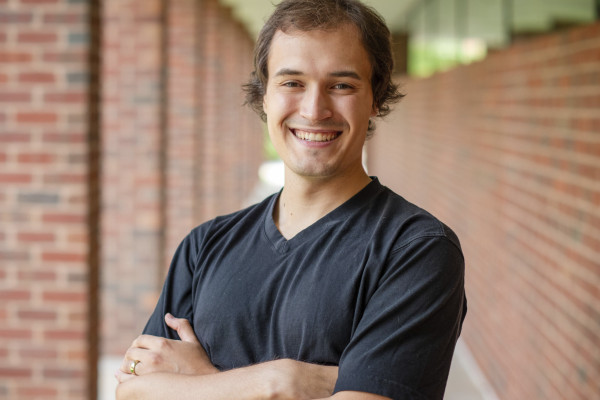
Tom Hartvigsen, assistant professor of data science at the University of Virginia, and his colleagues set out to address this issue through a new participatory approach to multimodal AI systems in dermatology. In September 2025, Hartvigsen and his team were awarded a $1 million National Institutes of Health grant for their project, “A Model Editing Framework for Participatory Multimodal AI in Dermatology.” Their approach allows dermatologists to edit AI models throughout their deployment, correcting errors and modifying AI behavior.
“I’m really excited that this work provides a path to let experts participate in developing and maintaining their own AI tools,” Hartvigsen said. “This represents a fundamentally new AI paradigm that centers users in individual AI deployments, giving people agency to hone AI tools to their specific needs. Success will require many technology advances and user studies that will teach us about connecting AI development directly to individual user needs.”
Hartvigsen is working with assistant professor Ahmed Alaa of the University of California, Berkeley and assistant professor Roxana Daneshjou of the Stanford School of Medicine. The team will contribute new methods, models and datasets for participatory multimodal AI.
“Dermatology has been central to medical AI development for many years, so dermatology uses are a great place to study and develop participatory AI,” Hartvigsen said. “However, it also reflects similar problems across medicine: Any time a user could consume the outputs from an AI, I think they deserve the right to provide feedback about the AI and be confident their feedback is improving the AI for their own needs and the health system’s needs.”
Hartvigsen said there is a chance the NIH will renew his grant for an additional year with the potential to extend even further.
The School of Data Science commends Hartvigsen and his team for exemplifying the School’s commitment to using responsible data science to improve society.
Subscribe to receive updates from the School of Data Science.